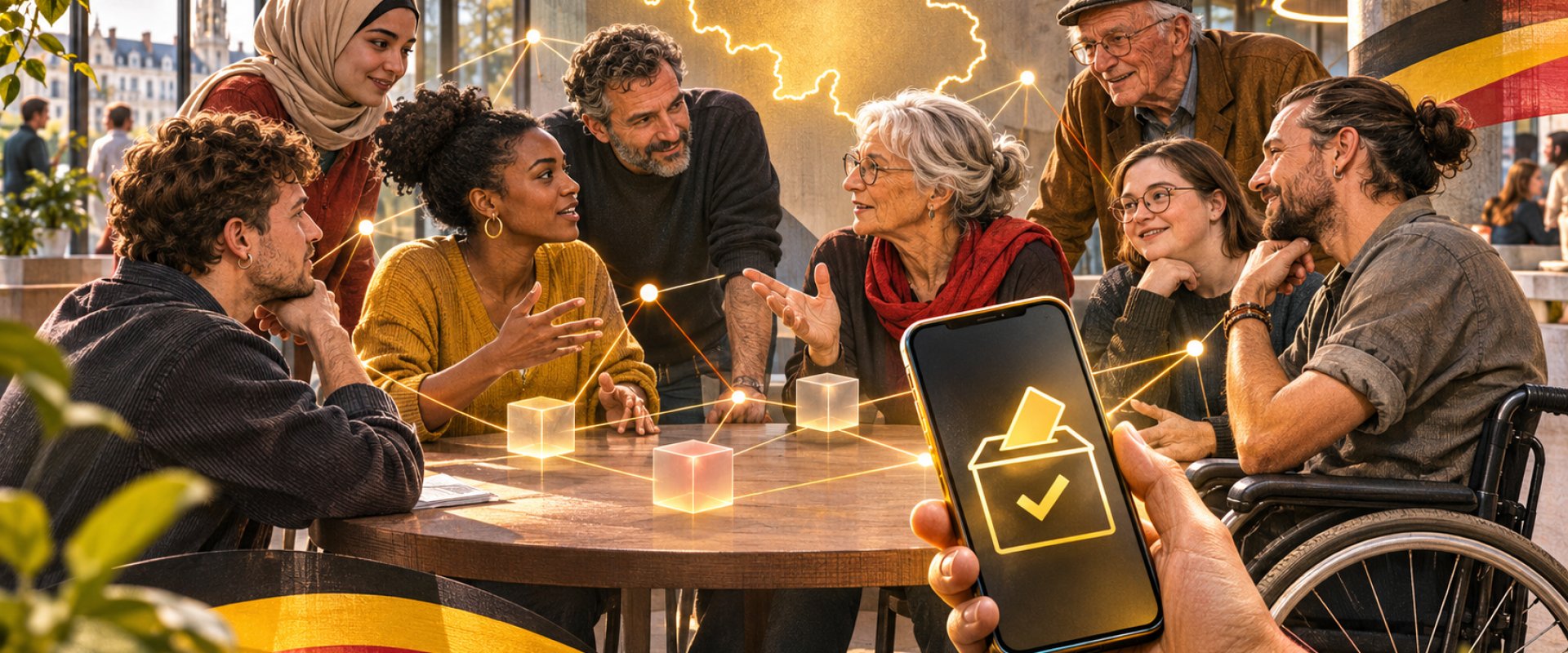
Turning Belgium into a citizen-led DAO !
This is the flagship proposal from Révolution to place decision-making power directly into the hands of citizens! Web3 and blockchain technologies make it possible to prevent electoral manipulation while doing away with representatives who fail to defend our rights—so let’s take advantage of this and create a Belgium 3.0!
Imagine residents proposing to make public buildings accessible to people with disabilities. They gather support, debate the cost and timetable, then put the proposal to a vote. If the law is passed, anyone can follow the progress of the work and hold the minister responsible for carrying it out to account.
That is what we propose with Belgium DAO. Belgian citizens would exercise legislative power directly. They could propose, amend and vote on laws, designate the members of the government responsible for implementing them, and scrutinise their work. Citizens could even remove ministers from office!
One person, one vote
DAO stands for “decentralised autonomous organisation”. Under our proposal, citizens would be political co-owners of the state, with equal rights. All power would be in the hands of the people. The government’s role would be limited to carrying out their decisions. This would be genuine democracy: government by the people, for the people!
The power to pass laws would shift from parliaments to citizens. Political parties would be banned, and there would no longer be career politicians.
Citizens propose laws and the government implements them
The proposal sets a threshold of support from 1% of the electorate within 90 days for an initiative to be considered at national level. Regular legislative sessions would give citizens time to read proposals, debate amendments and vote.
Citizens would directly designate the Prime Minister and ministers. If a recall request gained the support of 2% of the electorate within 30 days, a vote would be held. If the recall were approved under the proposed rules, the final certified result would take effect immediately, without a veto from the King or the Prime Minister.
A secret ballot accessible to all
A Web3 application would give citizens access to debates and votes. The blockchain would make it possible to verify how a vote was conducted and how the result was determined, while keeping individual ballots secret even from public authorities.
Every municipality would offer a free digital help desk. A smartphone would be provided free of charge to people who do not own one or are on a low income. The proposal also provides for payment in digital Belgian francs for completed legislative contributions, regardless of how a citizen votes.
A phased transition
Non-binding trials would allow the system to be tested before it goes live. The transfer of powers would require constitutional reform and would take place gradually, with public services continuing throughout.
Read the full proposal
The full proposal is available in French, English, Dutch and German.
Read the full proposal on Heyzine