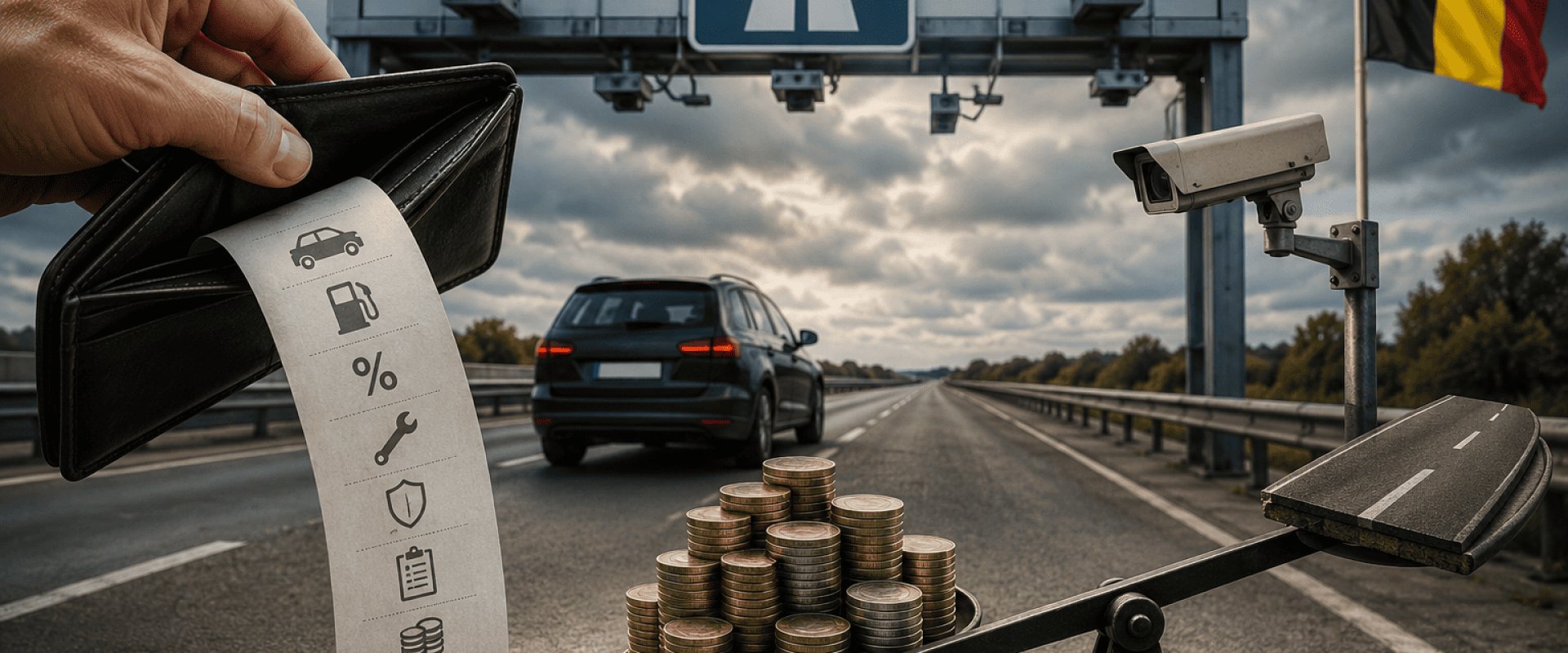
A tax revolution thanks to the micro-tax !
The Revolution movement intends not only to revolutionize the democratic system of our country by establishing a total participatory democracy, but it also wishes to implement a profound reform of taxation by proposing a new tax paradigm: the micro-tax !
The Revolution movement aims not only to revolutionize the democratic system of our country by establishing a fully participatory democracy, but also seeks to implement a deep reform of taxation by proposing a new fiscal paradigm: the micro-tax!
The observation: a tax system at the end of its tether
The current tax system mainly relies on:
- Labor
- Declaration
- Administrative complexity
- Ex-post monitoring
It results in:
- High tax pressure on labor income
- Costly bureaucracy
- Massive tax optimization
- Growing distrust from citizens
This system is heavy, bureaucratic, and punitive. It is based on a narrow tax base, multiplies high marginal rates, tax loopholes, and complex declarations. It penalizes work, discourages initiative, and weighs particularly on the working and middle classes.
Belgium has one of the highest tax burdens in Europe. According to the OECD (2024 data confirmed in 2025), tax revenues and social contributions reach 42.6% of GDP (€600–650 billion), i.e., about €280 billion per year.
Despite this massive levy, public debt continues to rise. According to the Federal Planning Bureau, at the beginning of 2026, it stands at about 107% of GDP, i.e., €695 billion! By 2029, public debt will reach 117% of GDP, around €750 billion. Worse, if nothing changes, by 2034, debt will reach €1,000 billion!
Are we going to keep increasing debt and darkening the future of our children without reacting?
Revolution proposes a paradigm shift: instead of heavily taxing what people produce and consume, let’s lightly tax what everyone uses: the circulation of money itself!
In an economy where money circulates constantly in an increasingly electronic way (98% of financial operations are now digital), taxing what moves rather than what is declared becomes an economic no-brainer.
The micro-tax meets budgetary, technical, and social constraints while paving the way for a fairer, more prosperous, and more sovereign Belgium.
The micro-tax: a fluid, instantaneous, and universal tax
The Micro-Tax is a light, neutral, transparent, and fully automatic taxation on all electronic and digital financial transactions.
Concretely, we propose introducing a tax of:
That is 0.8% in total on non-cash bank transactions.
In this new Belgian fiscal paradigm, with a sovereign Belgium having left the European Union through the BelEXIT we advocate, all electronic, digital, and numerical financial transactions — without exception, without threshold, without exemption — are subject to an automatic micro-tax.
This micro-tax completely replaces all current taxes:
- Income tax
- Corporate tax
- VAT
- Excise duties
- Cadastral tax
- Stock exchange transaction tax
- Inheritance tax
- And more...
This micro-tax is collected in real time, at each movement of digital money, directly by the FPS Finance, via a banking API integrated into all payment systems, wallets, banks, cryptocurrency platforms, and mobile applications.
With each transaction, we directly pay our taxes. No more paperwork, no more complex declarations, no more heavy tax audits. Everything becomes automatic, transparent, and managed by banks in coordination with FPS Finance.
The micro-tax transforms taxation into a light and continuous levy on the movement of money, leveraging (without imposing) the massive digitalization of payments. It aims to radically simplify the tax system while increasing state revenues thanks to a much broader tax base.
How does it work concretely?
💳 Example 1: Purchase at Delhaize
When you pay €50 at Delhaize with your card:
- €0.20 is additionally deducted from your account (0.4% debit) — you pay €50.20
- €0.20 is deducted from Delhaize’s account (0.4% credit) — they receive €49.80
Total: 40 cents of tax paid instantly
💰 Example 2: Receiving salary
When you receive your salary of €2,500:
- €10 is deducted from your employer’s account (0.4% credit), who therefore pays €2,510
- €10 is deducted from your account, and you receive €2,490 net
No declaration. No waiting. No audit. Tax is paid continuously!
FPS Finance becomes a state fintech
FPS Finance is no longer a bureaucratic tax collector, but a national digital treasury.
According to estimates by Professor Marc Chesney, the potential tax base with the micro-tax would be 150 times Belgium’s GDP. With a current GDP of about €650 billion, the new "Micro-tax GDP" would represent a tax base of €97,500 billion.
According to this study, estimated annual revenues would be: 0.8% of €97,500 billion = €780 billion per year, whereas with the current system, tax and parafiscal revenues amount to only €280 billion per year!
For our analysis, we will rely on a cautious scenario rather than Professor Chesney’s estimates, to avoid being seen as dreamers...
With Micro-Tax revenues (between €400 and €504 billion per year under our cautious scenario), and after replacing €300 billion in current tax and social contributions, the net surplus available is €100 to €200 billion per year!
Micro-tax revenues cover all:
- Card payments
- Transfers
- Salaries
- Online purchases
- Subscriptions
- Peer-to-peer transfers
- Stock market investments
- Cryptocurrency exchanges
- Interbank flows
Physical cash escapes the tax as long as it remains outside the digital circuit. It is only micro-taxed upon withdrawal (0.4%) and deposit (0.4%) in a bank. The Revolution movement does not in any way wish to eliminate cash, which is already very marginal compared to digital operations.
The Citizen Income (CI): €1,350 per month for everyone, from birth!
Thanks to the net surplus of €100 to €200 billion per year, the State can fund a Citizen Income of €1,350 per month on average (between €1,200 and €1,500 depending on age), paid to all Belgian residents without any condition or justification:
- ✅ From birth
- ✅ Until death
- ✅ Stackable with salaries, pensions, and business income
Funding
For 11.8 million beneficiaries, this represents a gross cost of €191 billion per year.
But:
- €55 to €65 billion saved through the elimination of current social benefits (unemployment, CPAS, family allowances, etc.)
- €12 to €18 billion saved through drastic reduction of tax bureaucracy and the end of declarations and audits
The net cost of Citizen Income is therefore €108 to €124 billion, largely covered by the micro-tax, with a structural surplus of €0 to €92 billion per year.
Citizen Income also implies state price control to prevent companies from raising prices and capturing the increased purchasing power.
Difference between Citizen Income and Universal Income
Citizen Income is not a conditional basic income like that proposed by Klaus Schwab’s WEF. Their model involves control, conditionality, and behavioral tracking.
Our Citizen Income is the exact opposite: unconditional, no tracking, no conditions, no bureaucracy, no programmable money.
Its goal is to ensure national sovereignty, strong purchasing power, and economic freedom.
A happy, free, and prosperous Belgium — the opposite of the Great Reset.
Public interest missions for the unemployed
The 300,000 unemployed keep their Citizen Income.
If they voluntarily contribute at least 4 hours per day to public interest missions, they receive about €600 extra per month.
- Park maintenance
- Helping the elderly
- Supporting people with disabilities
- Cultural activities
- Tutoring
- Road infrastructure
This activates the population and reduces structural unemployment to near zero.
Prisoners: restorative justice
For the 11,000 prisoners, Citizen Income is suspended.
The €190 million saved is allocated to a victim compensation fund.
Impact on purchasing power: a net gain for all
All social classes gain purchasing power.
Conclusion: a Win for Life for all Belgians!
With the micro-tax, Belgium becomes the first post-tax, post-unemployment, post-inequality nation.
- ✅ €400–504 billion in automatic revenue
- ✅ €1,350/month per citizen
- ✅ Abolition of VAT and excise duties
- ✅ Zero declarations, zero fraud, zero bureaucracy
- ✅ Relocalization and reindustrialization
- ✅ Public debt reduced
The end of punitive taxation. The beginning of fluid taxation.
An euro that moves pays. A citizen who lives receives.
The micro-tax is the Win for Life for every Belgian!
The micro-tax: neither left nor right
When money circulates, it contributes. When a citizen lives, they are protected.
The micro-tax is not a utopia. It is a modern infrastructure of solidarity.
It is post-ideological, pragmatic, and transparent.
- ❌ End of punitive taxation
- ❌ End of absurd complexity
- ❌ End of permanent social insecurity
- ✅ Beginning of fluid taxation
- ✅ Mature democracy
- ✅ Sovereign and confident Belgium