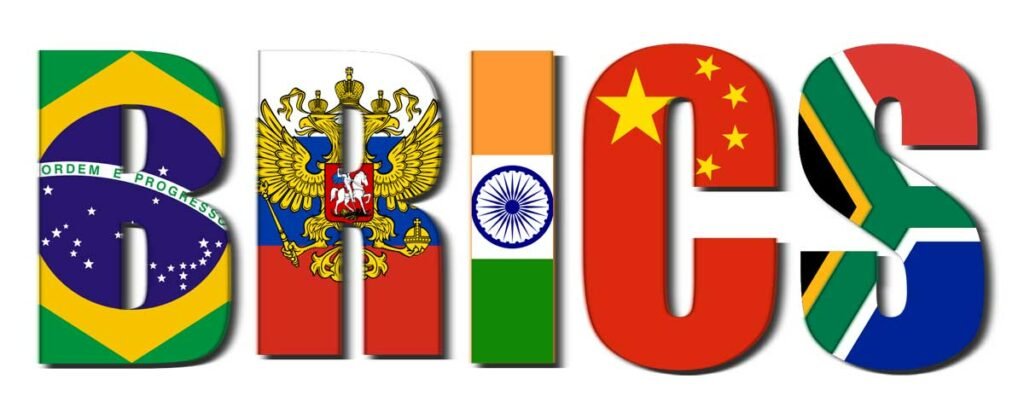
Leave the European Union and join the BRICS!
Leaving the EU aims to regain our freedom. Aligning with the BRICS allows us not to remain alone and to revive our economy in a healthy environment.
It is time to ask a question that many still consider taboo: can Belgium continue to anchor the entirety of its strategic future to a European Union whose relative economic weight has been declining year after year?
The world has changed radically!
The center of gravity of the global economy is no longer located exclusively in Europe or North America. It has shifted toward Asia, toward the major emerging powers, toward what is now called the Global South. The BRICS represent nearly 40% of global GDP and about half of the world’s population.
While we debate within the European Union about additional standards, budget adjustments, and institutional reforms, other regions are investing massively, industrializing, securing their resources, and structuring new economic alliances.
Belgium cannot afford to ignore this transformation!
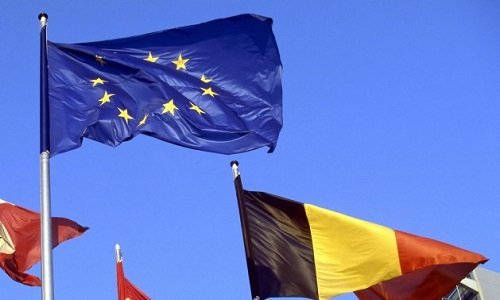
The European Union has become a normative power. It regulates. It frames. It harmonizes. It stifles! Regulating is not enough to generate economic dynamism!
While Europe slows down, India is posting some of the highest growth rates in the world. China remains an essential industrial engine. Energy- and strategic raw-material-producing countries are redefining trade balances.
We are facing a historic turning point!
A European Union that creates poverty
The European Union has utterly failed. Not only is it incapable of guaranteeing peace. Worse still, it never stops engaging in provocations, and moreover, it has in no way brought joy and prosperity to the Belgian people. The European Union has put our workers in direct competition with workers from Eastern countries whose wages and employers’ social charges are much lower than in Belgium, leading to an incalculable number of factory closures and relocations. Furthermore, it must be acknowledged that a European identity does not exist and that the realities of each country are so different that implementing common policies is futile.
The European Union is a ship adrift!
Leaving the European Union
Leaving the EU aims to allow Belgium to regain its freedom. We must leave a non-democratic institution that has established unfair competition among its workers in order to win back national sovereignty and put an end to the weight of lobbies on decisions taken by the technocrats of the European Union.
It is therefore necessary to take our country out of the European Union by triggering BELEXIT via Article 50 of the European Treaty, which allows any country to leave the EU whenever it wishes.
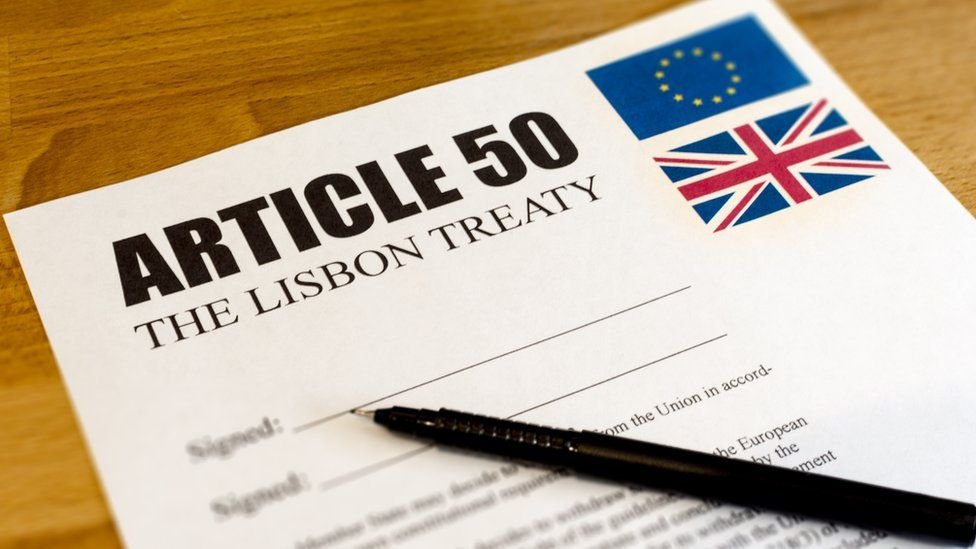
How does it work?
• The Belgian government sends an official letter to the European Council: “We want to leave the EU.”
• From that letter, the EU has 2 years to negotiate a withdrawal agreement (terms, future relations, etc.).
• If nothing is signed (what is called “no deal”), after exactly 2 years we leave completely: no more EU treaties, no more Brussels rules, no more VAT imposed by the EU, no more constraints on our budget or our currency.
It is legal and the United Kingdom has already done it, even though they signed an agreement, which we would not do because a NO-DEAL would free us faster and more radically.
Join the BRICS!
Of course, by triggering BELEXIT, the goal is not to isolate Belgium but to change partners in order to engage in win-win relations.
- Economic Weight: BRICS members represent around 40% of global GDP in current value and a significant share of the population, playing a major role in global economic growth. By comparison, the EU represents a much more modest share of global GDP (only 14%).
- Objectives: the BRICS promote a multipolar world order, often criticizing Western dominance and seeking to reform international financial institutions (IMF, World Bank).
- New Development Bank : based in Shanghai, this bank supports infrastructure projects in member countries and emerging economies.
- Cooperation: the group discusses the de-dollarization of trade and the use of national currencies.
Unlike the European Union, the BRICS do not constitute a binding supranational structure. There is therefore no transfer of sovereignty, no superior law, no mandatory harmonization. States retain full control over their budgetary, monetary, and industrial levers.
In an unstable world, diversification is insurance.
Today, Belgium depends heavily on supply chains controlled by external powers. Rare earths, certain critical metals, and a significant share of global energy production are concentrated in countries linked to the BRICS. Can we seriously talk about European sovereignty when our industries depend on external strategic resources?
Opening up to the BRICS means recognizing this reality and acting accordingly!
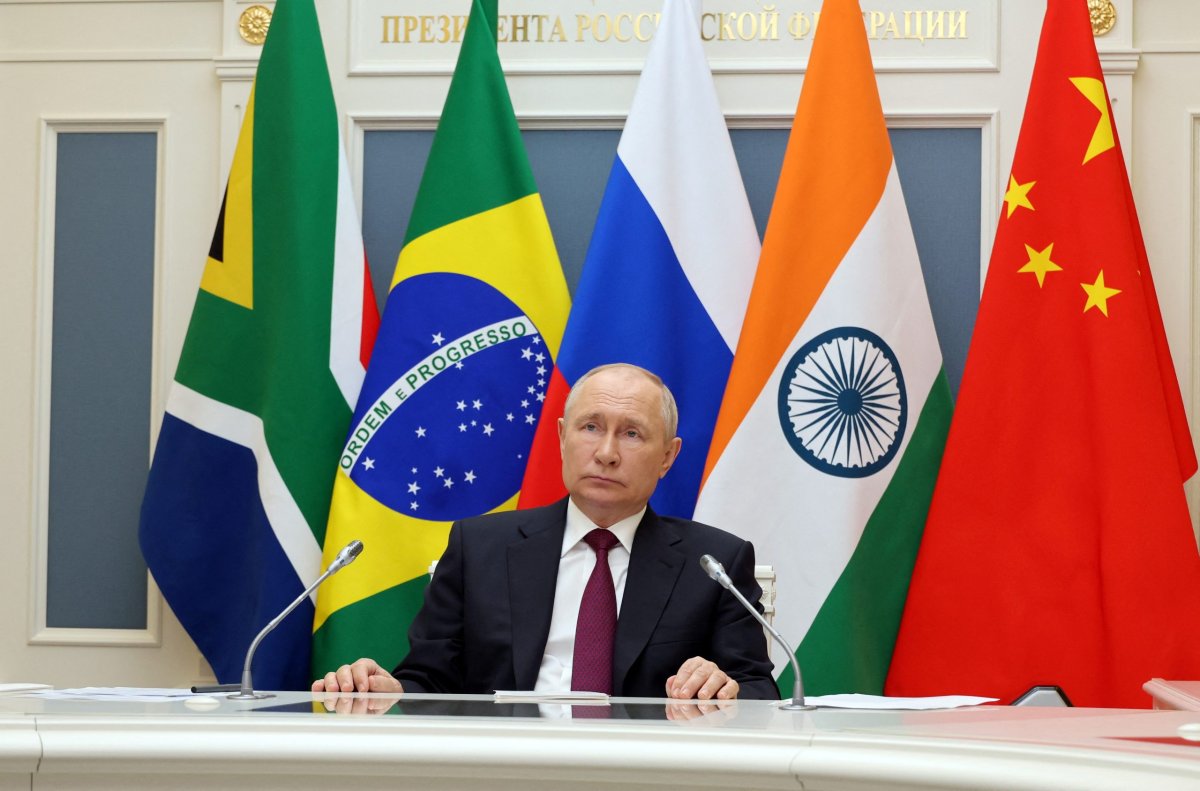
Aligning with the BRICS allows us not to remain alone once we have left the European Union and to revive our economy in a healthy environment.
The BRICS are not a supranational union like the European Union. It is precisely this institutional difference that means we would find far more freedom there than within the European padlock.
Institutional nature: integration vs. coordination
The European Union is :
- a supranational organization
- in which there is a body of European law that is binding and superior to national law
- with institutions capable of imposing common standards (Commission, CJEU, ECB).
- and monetary integration for countries in the euro area.
Member States must comply with:
- European regulations that are directly applicable
- directives to be transposed
- common standards on competition, environment, trade, public procurement, state aid
This limits:
- national industrial policies
- strategic subsidies
- certain economic protections
At the level of economic and budgetary policy:
- monetary policy is managed by the ECB.
- budget rules are framed (Stability Pact, deficit/debt criteria).
- there is less flexibility in the event of a specific national crisis.
The European Union imposes geopolitical alignment:
- strong diplomatic harmonization.
- common trade policy.
- sanctions decided collectively.
- frequent alignment with the Euro-Atlantic bloc.
👉 Member States transfer a large part of their sovereignty to the European Union.
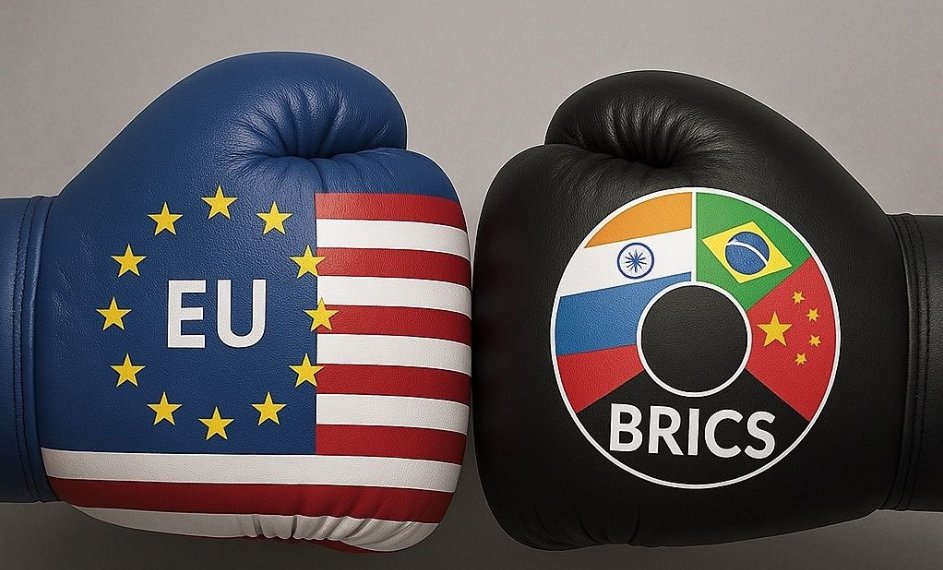
The BRICS are :
- an intergovernmental group
- without binding common law
- without supranational authority
- where decisions are taken by consensus
- without any obligation of regulatory harmonization
No mandatory harmonization:
- Each country keeps its industrial policy
- Each country keeps full freedom over its taxation
- Each country keeps freedom over market regulation
- Each country retains complete monetary freedom
At the level of economic and budgetary policy:
- Each State retains its central bank.
- Each country keeps full freedom over its monetary policy.
- No budget rule is collective.
The BRICS do not impose geopolitical alignment:
- No mandatory diplomatic alignment.
- No binding common foreign policy.
- Each country pursues its own independent international strategy.
👉 States retain the entirety of their legislative sovereignty! The BRICS do not impose a uniform regulatory framework! BRICS States keep full control over their economic levers.
👉 The BRICS offer flexible cooperation without a formal loss of sovereignty.
The BRICS coordinate and collaborate; the EU integrates to the point of abolishing all national sovereignty.
Europe likes to think of itself as the center of the world. But reality is different. European growth is stagnating around 1%. Its relative economic weight is declining year after year. Its demographics are shrinking. Its global influence is fading.
Meanwhile, the BRICS represent nearly 40% of global GDP in purchasing power parity and nearly half of the world’s population.
The world is not reorganizing around Brussels. It is reorganizing around new economic powers.
The question is simple: will we continue to look at the world from the standpoint of our certainties, or will we look at the world as it has become?
The BRICS represent:
- a significant share of the world’s population
- sustained demographic and economic growth (especially India and some emerging countries)
- nearly 49% of the world’s population, which provides access to a gigantic market
Belgium could:
- strengthen its exports (pharma, chemicals, logistics, agri-food, technologies)
- consolidate the position of the Port of Antwerp-Bruges as a strategic hub toward these markets
The BRICS are no longer a marginal bloc: their economic weight exceeds that of traditional Western economies!
2. Access to alternative financing
The BRICS have the New Development Bank.
Potential advantage:
- access to financing mechanisms complementary to Western institutions
- opportunities for Belgian companies in infrastructure projects in member countries
3. Multipolar geopolitical positioning
Joining the BRICS could allow Belgium to:
- diversify its strategic partnerships
- strengthen its capacity for international mediation
- play a bridging role between Europe and emerging economies
This could strengthen Brussels as a global diplomatic capital.
4. Industrial and energy opportunities
Together, the BRICS hold significant energy and mining reserves:
-
-
72% of global rare-earth reserves, essential for advanced technologies.
-
44% of global oil production
-
36% of global natural gas production. natural gas.
-
👉 For Belgium, a country highly dependent on imports of industrial and energy materials, strategic proximity with these countries can reduce supply costs and strengthen energy security.
Some BRICS members are:
- major energy producers
- suppliers of strategic raw materials
Potential advantages:
- diversified and less costly energy agreements
- securing certain supply chains
5. Influence in redefining the global economic order
The BRICS seek to:
- rebalance international financial institutions
- strengthen trade in local currencies
- promote a multipolar world
Belgium could:
- take part in discussions on the evolution of the international monetary system
- influence certain global economic orientations
6. Financial attractiveness
Brussels could become:
- an entry point for BRICS investments in Europe
- a center for economic dialogue between blocs
The European Union suffers from structural burdens:
- low growth
- over-regulation
- difficulty in making quick decisions
- energy and strategic dependence
In a rapidly changing world, slowness becomes a handicap.
The BRICS, for their part, are moving forward. They invest massively. They build infrastructure. They structure emerging markets.
India posts some of the highest growth rates in the world. China remains a major industrial engine. The expanded emerging BRICS countries include strategic producers of energy and raw materials.
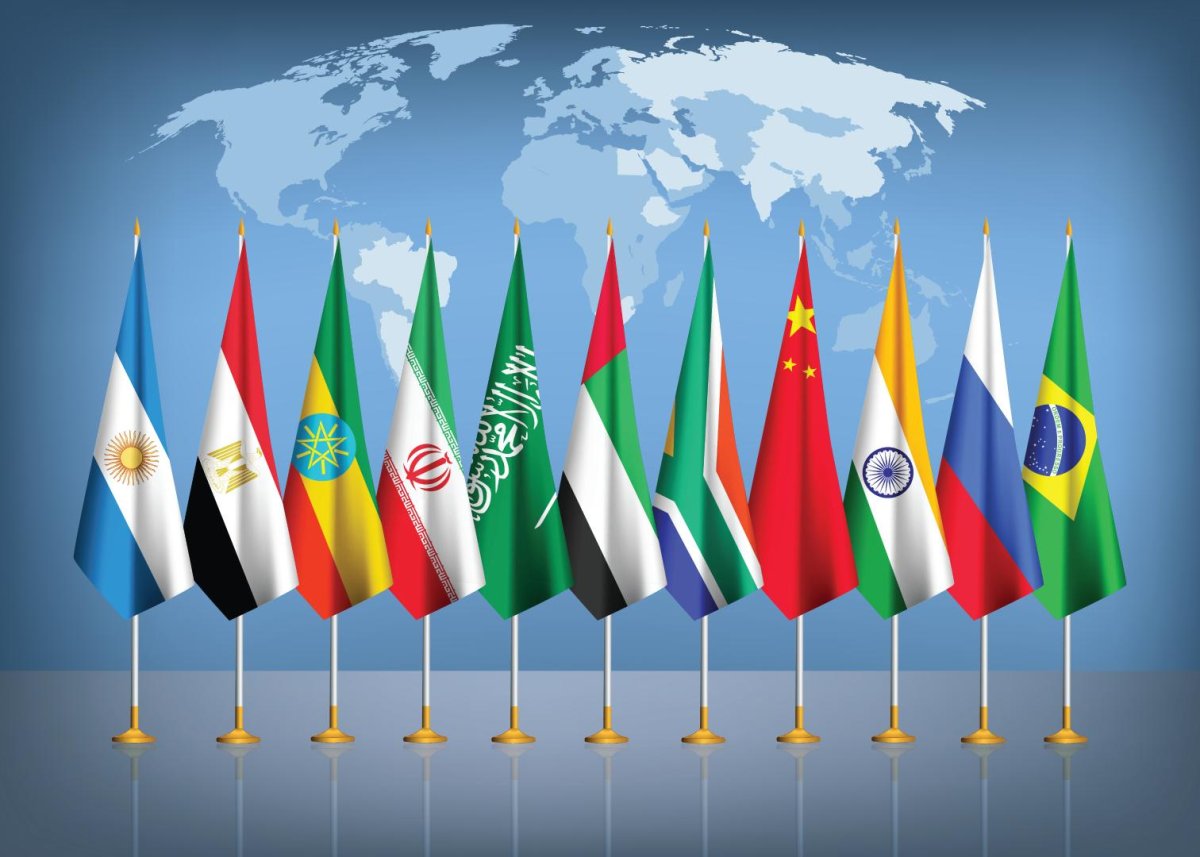
While Europe debates additional standards, the world invests. Our companies need dynamic outlets. Our ports need growing trade flows. Our industry needs secure access to resources.
Can we seriously ignore markets that represent nearly half of humanity?
| Field | Potential advantage |
|---|---|
| Trade | Access to emerging markets |
| Finance | Diversification of financing |
| Diplomacy | Multipolar positioning |
| Industry | Securing raw materials |
| Influence | Participation in global economic reform |
Dynamism and growth prospects:
Economic projections show that:
- the BRICS show, on average, much higher GDP growth (≈ 3.8%) over the coming years than developed countries.
- by contrast, the EU, already facing relatively low growth, is expected to be around ≈ 1% to 1.6% per year according to the latest forecasts.
➡️ For Belgium, joining a fast-growing bloc can open up opportunities for industrial development, exports to high-growth markets (India, Indonesia, the Emirates, etc.), and economic diversification.
Synthetic comparison: BRICS vs EU (key elements):
| Element | BRICS | EU |
|---|---|---|
| Share of global GDP (PPP) | ≈ 40% | ≈ 14% |
| Projected economic growth | ~3.8% | ~1% – 1.6% |
| World population | ≈ 49% | ≈ 5% – 7% |
| Strategic resources | Very high (rare earths, energy) | Less significant |
| Emerging markets | Direct access | Indirect |
| Geopolitical orientation | Multipolar | Integrated Western |
Dare to break away!
Why wouldn’t Belgium become a bridge between Europe and the Global South? Leaving the European Union to join the BRICS addresses the three major grievances of Belgians: too many taxes, too many EU rules, and too much dependence on a system that impoverishes us.
The world is changing. Growth is shifting. Balances are evolving.
Belgium must choose today: remain in an economically stagnant comfort zone or actively take part in the emerging global dynamic.
We want a bold Belgium. A strategic Belgium. A Belgium turned toward the future!
Considering integration into the BRICS constitutes a strategic break. It disrupts our diplomatic habits, certainly, but it calls for a courageous national debate.
Major strategic choices are not made to preserve habits. They are made to anticipate the future. Belgium must not withdraw into itself. It must not isolate itself. On the contrary, it must broaden its alliances.
In a fragmented world, those who multiply partnerships strengthen their autonomy. Those who shut themselves in reduce it.
Révolution wants to set Belgium on the path of evolution, and for us, that evolution necessarily requires a change of strategic partners!