Autopsy of a Belgium under health-policy tutelage!
When health policy threatens the sovereignty of nations. Révolution calls on Belgium to withdraw from the WHO and guarantee genuine freedom of choice regarding vaccination!
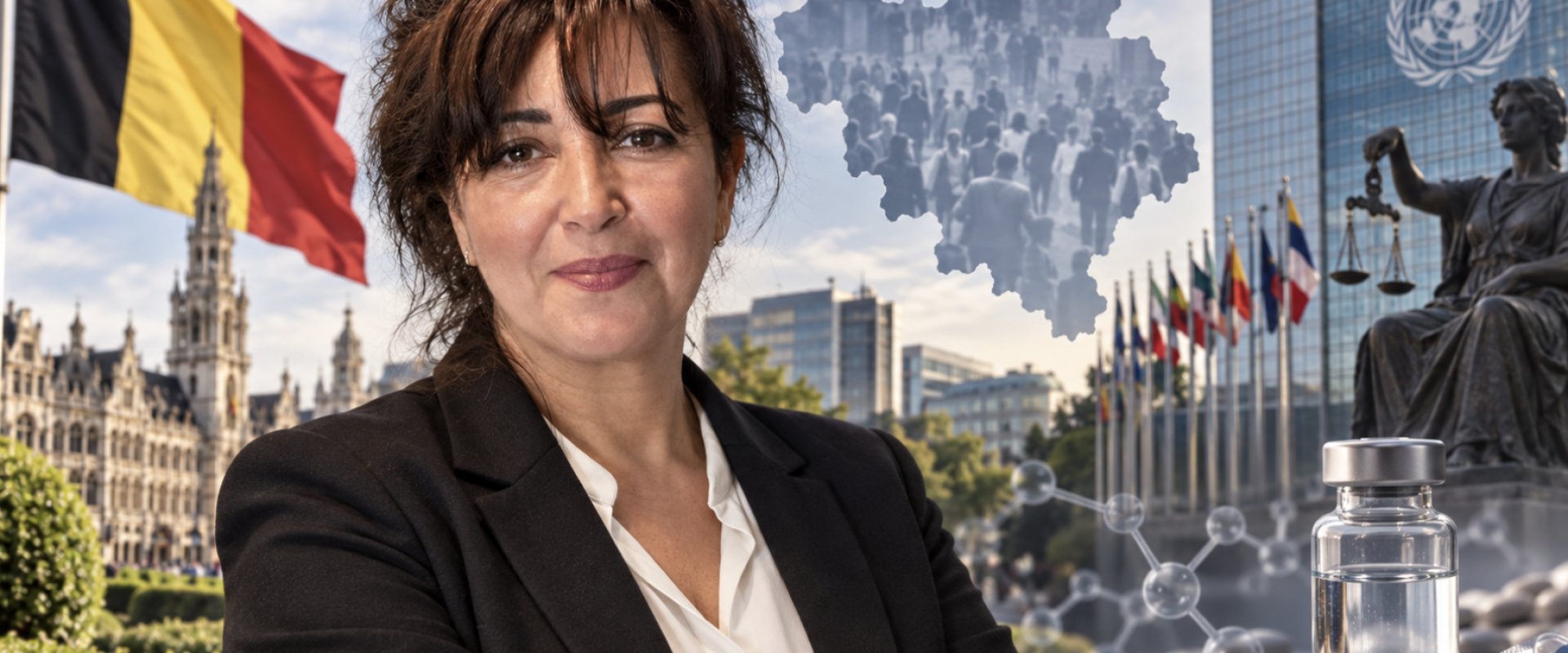
Under the particularly evocative title “Autopsy of a Belgium Under Guardianship – Leaving the WHO and Demanding Unconditional Freedom of Vaccination”, a 31-page study written by our head for Hainaut, Malika Sbahi, delivers a severe indictment of the evolution of modern medicine, the influence of the pharmaceutical industry and Belgium’s gradual loss of sovereignty over public health.
The document does not merely question certain decisions taken during the Covid-19 crisis. It seeks to trace the historical origins of a system in which public health was gradually placed under the control of industrial, financial and supranational interests.
The central message is clear: medical freedom cannot exist when decisions concerning our bodies are influenced by international institutions, private foundations and pharmaceutical multinationals that largely escape democratic control.
From Pasteur to the industrialisation of medicine
The first part of the report goes back to the 19th century and examines Louis Pasteur. In particular, the study draws on the research of American historian Gerald Geison, author of The Private Science of Louis Pasteur, published in 1995 after he examined the French scientist’s personal notebooks.
According to the analysis developed in the document, the official image of Pasteur was largely idealised. He can thus be criticised for having concealed certain experimental data, embellished the results of his research and failed to give sufficient recognition to work carried out by other researchers.
Beyond Pasteur himself, Malika Sbahi primarily denounces a profound change in the conception of medicine. Patients would gradually have ceased to be considered as a whole and instead become the recipients of standardised treatments produced and marketed on a large scale.
The study therefore contrasts medicine centred on the patient’s “terrain”, prevention and the individual characteristics of each patient with industrial medicine focused primarily on patented drugs.
The Flexner Report and the birth of a medical monopoly
The document continues its analysis by looking back at the 1910 Flexner Report, funded by the Carnegie Foundation. This reform profoundly transformed medical education in the United States and Canada.
According to Malika Sbahi, this reorganisation also enabled foundations linked to major industrial fortunes, notably those of John D. Rockefeller and Andrew Carnegie, to gradually impose a form of medicine based on chemistry, surgery and patentable molecules.
Traditional, natural and alternative forms of medicine were consequently gradually marginalised or even eliminated from university curricula.
Malika Sbahi sees this as the birth of an economic system in which chronic illness became particularly profitable: a patient who remained dependent on treatment would represent a far more attractive market than a patient who had been permanently cured.
These are, moreover, exactly the arguments expressed by our President and founder, Laurent LOUIS, during his term as a federal Member of Parliament before the Belgian Chamber of Representatives: https://www.youtube.com/watch?v=NHydoyTy67E&t=3s
This particularly severe interpretation leads Malika Sbahi and the entire Révolution movement to question the historical links between the petrochemical industry, philanthropic foundations, medical universities and, later, the major international health institutions.
The WHO and the growing influence of private interests
The creation of the World Health Organization in 1948 marked a new stage in the centralisation of public health policies.
In particular, Malika Sbahi criticises the WHO for having become overly dependent on voluntary funding and partnerships with private foundations, foremost among them the Bill & Melinda Gates Foundation.
The report emphasises that a private actor with considerable financial resources can now influence international health priorities without having received the slightest democratic mandate from the populations concerned.
This influence is said to be exerted through vaccination programmes, partnerships with the pharmaceutical industry and organisations such as Gavi, the Vaccine Alliance.
Malika Sbahi also examines the Pandemic Agreement adopted within the framework of the WHO, as well as the amendments to the International Health Regulations. The Révolution movement fears that these mechanisms will gradually reinforce the power of supranational institutions at the expense of States, national parliaments and individual consent.
Belgium at the heart of the vaccine industry
Malika Sbahi’s study devotes considerable attention to Belgium, which has become a major centre for production and research in the pharmaceutical and vaccine sectors.
In particular, she cites investments made in companies such as Univercells in Gosselies and Quantoom Biosciences in Nivelles. The report also examines the relationships between Belgium, the Gates Foundation, Gavi, the Institute of Tropical Medicine in Antwerp and the Belgian development agency Enabel.
According to Malika Sbahi, these partnerships illustrate the Belgian public health policy’s growing dependence on private international actors.
The study does not merely challenge the amounts committed. Above all, it raises an essential democratic question:
Who really decides our country’s public health priorities?
Are these priorities still decided by citizens and their representatives, or are decisions now prepared within structures where governments, pharmaceutical multinationals, private foundations and international organisations operate side by side?
Freedom of vaccination that is more theoretical than real
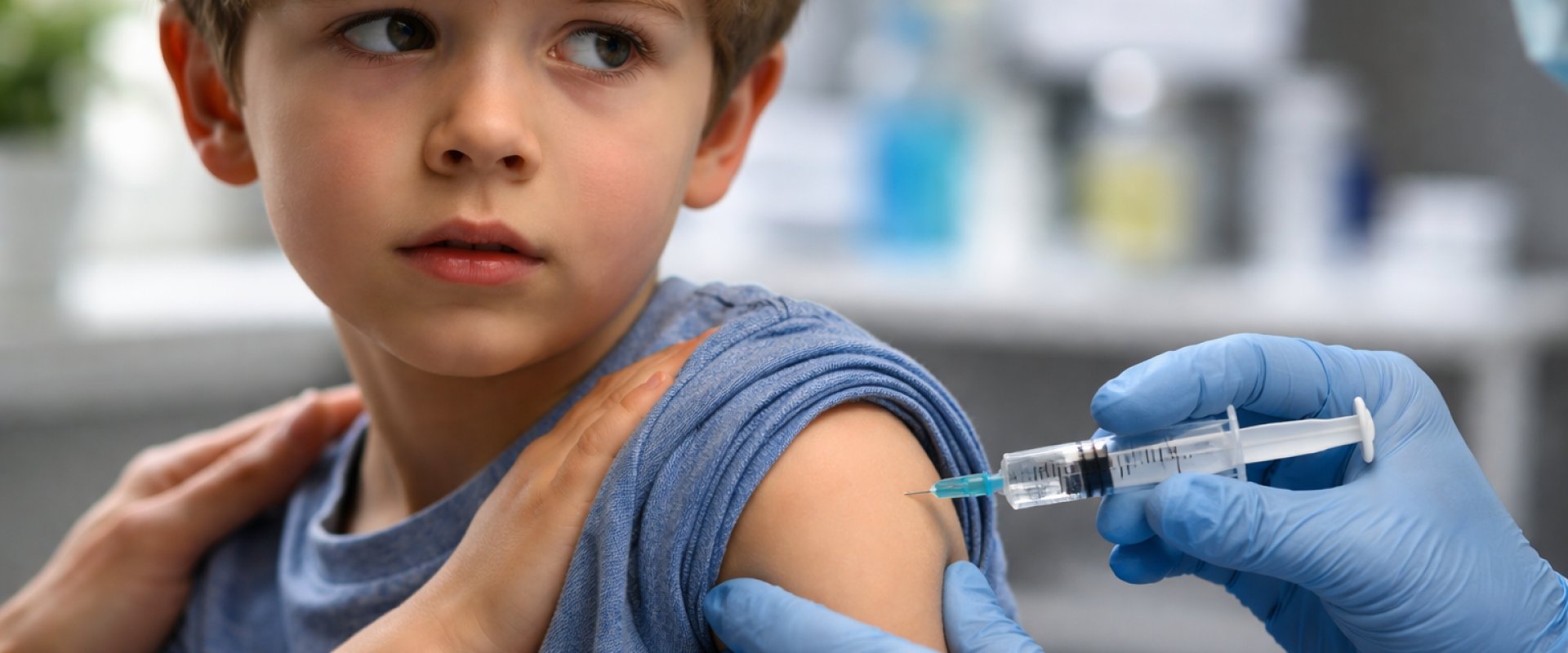
In Belgium, only vaccination against poliomyelitis is subject to a general legal obligation. Legally speaking, the other vaccines are recommendations.
However, this freedom remains largely theoretical!
In practice, parents may face considerable pressure when enrolling their children in certain childcare facilities. The regulations applied by nurseries falling under the ONE or Kind en Gezin may require several vaccinations as a condition of admission, even though these vaccinations are not made compulsory by federal law.
The study thus describes a system of indirect coercion: the State does not officially make vaccination compulsory, but social, educational and administrative conditions can make refusal particularly difficult.
Malika Sbahi also denounces the pressure exerted in certain schools during human papillomavirus vaccination campaigns, as well as some parents’ fear of being reported to youth welfare services.
Refusing a vaccination that is merely recommended should never, in itself, be sufficient grounds for considering a child to be in danger.
Free and informed consent must remain the rule!
The study reiterates the importance of the Belgian Law of 22 August 2002 on patients’ rights.
Article 8 establishes the principle that every medical intervention requires free and informed consent. This means that patients, or their legal representatives in the case of children, must receive understandable information about the nature of the treatment, its usefulness, its risks, its side effects and the available alternatives.
Consent obtained through pressure, threats or fear of losing a place in a nursery cannot be regarded as truly free!
The report therefore proposes several template letters allowing parents to formally notify the relevant parties of their refusal of a non-compulsory vaccination and to remind the establishments concerned of the provisions of the law on patients’ rights.
These templates do not, of course, remove the need to obtain legal advice suited to each individual situation.
Pharmacovigilance: victims must be heard
Another chapter of this study is devoted to the operation of pharmacovigilance in Belgium.
Suspected adverse reactions to medicines or vaccines may be reported to the Federal Agency for Medicines and Health Products. They are subsequently transmitted to European databases.
The report nevertheless criticises the reporting system for being overly complex, insufficiently accessible and discouraging for certain victims. It also considers that the agencies responsible for monitoring medicines should enjoy complete financial independence from the companies they supervise.
Pharmacovigilance worthy of the name must ensure that every report is examined seriously. It cannot simply dismiss testimonies automatically on the grounds that a causal relationship has not been immediately demonstrated.
Confidence in medicine can only be restored through transparency, the publication of data and the existence of genuinely independent oversight.
The contested role of the Medical Association and the media
The study also criticises the attitude adopted towards doctors who expressed different opinions during the public health crisis.
It cites several Belgian practitioners who were sanctioned or subjected to disciplinary proceedings after publicly challenging certain medical protocols or vaccination policies, as was the case with our Honorary President, Dr Laurence Kayser.
According to Malika Sbahi, scientific debate cannot progress when professionals fear being suspended, dismissed or publicly discredited for having expressed disagreement.
The report levels similar criticism at Belgium’s major media outlets. Malika Sbahi criticises them for their excessive dependence on communications issued by the public health authorities and for their overly frequent use of labels such as “conspiracy theorist” or “anti-vaxxer”, which sometimes prevent any substantive discussion.
Science is not a dogma. It requires the confrontation of hypotheses, the right to doubt and the possibility of questioning decisions taken by the authorities.
Pregnant women and newborn babies: the example of RSV
The final part of the report examines new strategies for preventing respiratory syncytial virus, which is notably responsible for bronchiolitis in infants.
It examines the Abrysvo vaccine offered during pregnancy, as well as Beyfortus, a monoclonal antibody administered to newborn babies.
Malika Sbahi denounces the transformation of pregnancy and the first months of life into new pharmaceutical markets. She calls for greater perspective, comprehensive information for parents and complete transparency regarding the cost of these campaigns to the social security system.
Malika Sbahi also questions budgetary priorities: while hospitals and healthcare staff lack resources, a growing proportion of public spending is devoted to purchasing and reimbursing pharmaceutical products.
This issue deserves a genuine public debate, supported by figures and free from intimidation or caricature.
Révolution defends sovereignty over public health!
This study echoes several concerns that the Révolution movement has defended for many years: national sovereignty, democratic control over institutions, freedom of therapeutic choice and absolute respect for consent.
No international organisation, private foundation or pharmaceutical company should be allowed to decide, in place of citizens, what will be introduced into their bodies or those of their children.
Révolution demands:
- Belgium’s withdrawal from the World Health Organization;
- the guarantee of genuine freedom of vaccination without indirect sanctions;
- strict respect for free and informed consent;
- the prohibition of all discrimination based on vaccination status;
- independent, accessible and transparent pharmacovigilance;
- the publication of contracts concluded with the pharmaceutical industry;
- transparency regarding funding and conflicts of interest;
- the protection of doctors’ freedom of expression;
- a contradictory scientific debate open to all documented opinions;
- the preservation of sovereignty over public health in the hands of the Belgian people.
Public health must never become a means of circumventing democracy. Protecting the population does not mean depriving people of their free will.
Our bodies belong neither to the State, nor to the WHO, nor to pharmaceutical laboratories. They belong to each and every one of us.
The full study, entitled Autopsy of a Belgium Under Guardianship – Leaving the WHO and Demanding Unconditional Freedom of Vaccination, can be consulted here:
READ THE FULL STUDY