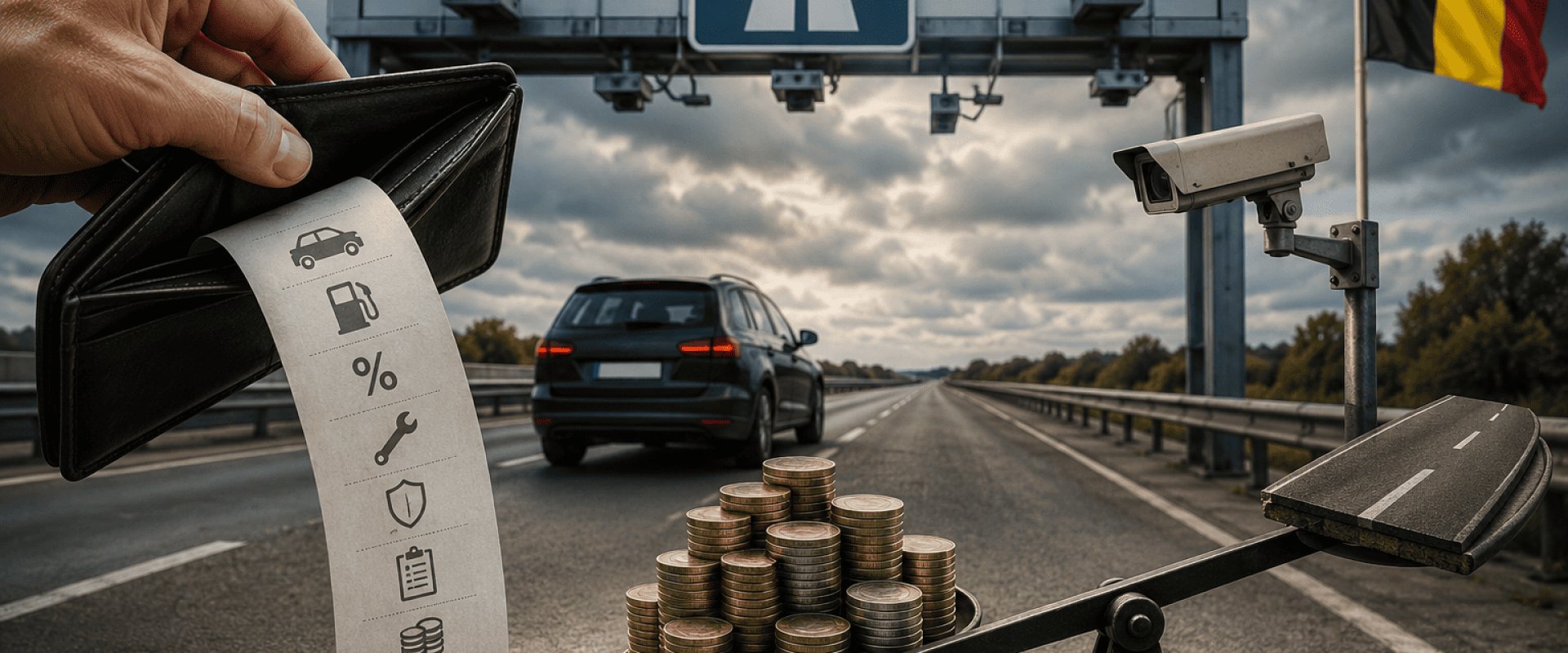
Eine Steuerrevolution dank der Mikrosteuer !
Die Revolutionsbewegung beabsichtigt nicht nur, das demokratische System unseres Landes durch die Errichtung einer umfassenden partizipativen Demokratie zu revolutionieren, sondern strebt auch eine tiefgreifende Steuerreform an, indem sie ein neues Steuerparadigma vorschlägt: die Mikrosteuer !
The Révolution movement aims not only to revolutionize the democratic system of our country by establishing a fully participatory democracy, but also wishes to implement a profound reform of taxation by proposing a new fiscal paradigm: the micro-tax!
The observation: a tax system that is running out of steam
The current tax system is mainly based on:
- Labour
- Declaration
- Administrative complexity
- Ex post control
It leads to:
- High tax pressure on labour income
- Costly bureaucracy
- Massive tax optimisation
- Growing distrust among citizens
This system is cumbersome, bureaucratic and punitive. It is based on a narrow base, multiplies high marginal rates, tax loopholes and complex declarations. It penalises labour, discourages initiative and weighs particularly heavily on the working and middle classes.
Belgium has one of the highest tax burdens in Europe. According to the OECD (2024 data confirmed in 2025), tax revenues and social contributions amount to 42.6% of GDP (€600–650 billion), i.e. approximately €280 billion per year.
Despite this massive siphoning off, public debt continues to rise. According to the Federal Planning Bureau, at the beginning of 2026 it amounted to approximately 107% of GDP, i.e. €695 billion! In 2029, public debt will rise to 117% of GDP and amount to around €750 billion. Worse still, if nothing changes, debt will reach €1,000 billion in 2034!
Will we continue to burden debt and darken the future of our children without reacting?
Révolution proposes changing the paradigm: instead of massively taxing what people produce and consume, let us lightly tax what everyone uses: the circulation of money itself!
In an economy in which money circulates constantly and increasingly electronically (98% of financial transactions are now digital), taxing what moves rather than what is declared becomes economically self-evident.
The micro-tax meets budgetary, technical and social requirements while at the same time opening the way to a fairer, more prosperous and more sovereign Belgium.
The micro-tax: a fluid, immediate and universal tax
The micro-tax is a light, neutral, transparent and fully automatic tax on all electronic and digital financial transactions.
Concretely we propose introducing a tax of:
That is 0.8% in total on non-cash bank transactions.
In this new Belgian fiscal paradigm, with a sovereign Belgium that has left the European Union via the BelEXIT that we advocate, all electronic, digital and numerical financial transactions — without exception, without threshold, without exemption — are subject to an automatic micro-tax.
This micro-tax fully replaces all current taxes:
- Income tax
- Corporate tax
- VAT
- Excise duties
- Cadastral tax
- Tax on stock exchange transactions
- Inheritance tax
- And much more...
This micro-tax is collected in real time, at every digital money movement, directly by the FPS Finance, via a banking API integrated into all payment systems, wallets, banks, crypto platforms and mobile apps.
With every transaction, we directly pay our taxes. No more paperwork, no more complex declarations, no more heavy tax audits. Everything becomes automatic, transparent and managed by the banks in cooperation with the FPS Finance.
The micro-tax turns taxation into a light and continuous levy on the movement of money, by harnessing the massive digitalisation of payments (without imposing it). It aims to radically simplify the tax system and at the same time increase state revenues thanks to a much broader tax base.
How does it work in practice?
💳 Example 1: Purchase at Delhaize
When you pay €50 at Delhaize with your card:
- €0.20 is additionally deducted from your account (0.4% debit) - so you pay €50.20
- €0.20 is deducted from Delhaize’s account (0.4% credit) - which therefore receives €49.80
Total: 40 cents of tax paid immediately
💰 Example 2: Receipt of salary
When you receive your salary of €2,500:
- €10 is deducted from your employer’s account (0.4% credit), which will therefore pay €2510
- €10 is deducted from your account and you therefore receive €2,490 net
No declaration. No waiting time. No audit. The tax is paid as you go!
The FPS Finance becomes a state fintech
The FPS Finance is no longer a bureaucratic tax collector, but a national digital treasurer.
According to the estimates of Professor Marc Chesney, the potential tax base with the introduction of the micro-tax would amount to 150 times GDP of Belgium. With a current GDP of around €650 billion, the new “micro-tax GDP” would represent a tax base of 97 thousand 500 billion euros.
According to this study, the estimated annual revenues would amount to: 0.8% of €97,500 billion = €780 billion per year, whereas with the current system tax and parafiscal revenues amount to only €280 billion per year!
For our analysis, we base ourselves on a cautious scenario and not on Professor Chesney’s nonetheless credible estimates, so as not to be dismissed as dreamers...
With the revenues from the micro-tax (between €400 and €504 billion per year according to our cautious scenario and not the €780 billion of Professor Chesney), and after replacement of the €300 billion current tax revenues and social contributions, the available net surplus amounts to €100 to €200 billion per year!
The revenues of the micro-tax cover all:
- Card payments
- Transfers
- Salaries
- Online purchases
- Subscriptions
- Transfers between friends
- Stock market investments
- Crypto exchanges
- Interbank flows
Physical cash escapes taxation as long as it remains outside the digital circuit. It is only subject to the micro-tax upon withdrawal (0.4%) and deposit (0.4%) at the bank. The Révolution movement does not in any way wish to abolish cash, which is in any case very marginal compared with the whole of digital transactions.
The Citizen Income (CI): €1,350 per month for everyone, from birth!
Thanks to the available net surplus of €100 to €200 billion per year, the State can finance a Citizen Income averaging €1,350 per month (between €1,200 and €1,500 depending on age), paid to all Belgian residents without any condition or justification:
- ✅ From birth
- ✅ Until death
- ✅ Can be combined with wages, pensions and business income
Funding
For 11.8 million beneficiaries, this means a gross cost of €191 billion per year.
But:
- €55 to €65 billion is saved thanks to the complete abolition of current social assistance (unemployment, CPAS, family allowances, living wage, social minima, etc.).
- €12 to €18 billion is saved thanks to the drastic reduction of tax bureaucracy, the end of tax returns, massive tax audits and the complex management of conditional support.
The net cost of the Citizen Income therefore amounts to €108 to €124 billion, largely covered by the micro-tax, with a structural surplus of €0 to €92 billion per year, i.e. up to 14.5% of GDP that we can devote, for example, to reducing the public debt.
The Citizen Income also entails the introduction of price controls by the State. Companies must not be allowed to exploit this increase in Belgians’ purchasing power to raise the price of their products or services. The State will make any windfall effect impossible!
Difference between the Citizen Income and Universal Income
The Citizen Income is not a conditional basic income such as that proposed by Klaus Schwab’s WEF in the framework of the Great Reset. Klaus Schwab’s project is a conditional basic income, controlled and often linked to “sustainable” objectives (social credit, programmable money, behavioural monitoring, forced reduction of consumption for the climate, compliance with behavioural or environmental standards), serving to make populations dependent on a globalised State and to legitimise supranational governance.
Our Citizen Income is the absolute opposite because it is unconditional: no conditions, no tracking, no justification, no CPAS file, no stigmatisation. Our Citizen Income provides neither CBDC (central bank digital currency) nor programmable money. It is not subject to climate, health or behavioural diktats. Our Citizen Income creates no dependency on a superstate or on globalist elites, but embodies the direct redistribution of speculative wealth (banks, hedge funds, international flows) to the Belgian people, to free individuals: refusing a badly paid job, starting one’s own activity, caring for one’s loved ones, consuming locally without fear of poverty.
The goal of the Citizen Income is to ensure national sovereignty, guarantee explosive purchasing power, put an end to fiscal slavery, and place the economy at the service of Belgians and not speculators.
The Citizen Income has nothing to do with the Marxist, globalist and conditional policy of the WEF: it is an ultra-liberating, national, anti-elite fiscal justice that gives power and money back to the people without any chains.
A happy, free and prosperous Belgium – exactly the opposite of the Great Reset.
Missions of collective interest for job seekers
The 300,000 current unemployed keep their Citizen Income.
If they agree to contribute voluntarily - at least 4 hours a day - to missions of collective interest, they receive financial compensation paid at the hourly minimum wage, i.e. about €600 extra per month.
Examples of missions:
- Maintenance of parks
- Help for the elderly
- Support for persons with disabilities
- Cultural activities
- School support
- Road infrastructure
This activates the population, strengthens social ties and reduces structural unemployment to almost zero.
Prisoners: restorative justice
For the 11,000 prisoners, the Citizen Income is suspended.
The thus saved €190 million is paid into a compensation fund for victims.
Impact on purchasing power: a net gain for everyone
| Profile | Before | After (with CI) |
|---|---|---|
| Worker (€2,200 gross) | ~€1,600 net | €3,550 |
| Executive (€4,500 gross) | ~€2,700 net | €5,850 |
| Pensioner (€1,800) | €1,800 | €3,150 |
| Unemployed person | €1,200 benefit | €1,950 (CI + collective work) |
All social classes gain purchasing power. Gross salaries become net salaries. Consumption explodes. Short supply chains and industrial relocation get a boost: each import is subject to the micro-tax several times in the chain, making local production more competitive.
Conclusion: a Win for Life for all Belgians!
With the micro-tax of 0.4% on debit and 0.4% on credit, therefore 0.8% in total, Belgium becomes the first post-tax, post-unemployment, post-inequality nation.
- ✅ €400 to €504 billion in automatic revenues
- ✅ €1,350 per month for every citizen
- ✅ abolition of VAT and excise duties for an increase in purchasing power
- ✅ Zero declarations, zero fraud, zero bureaucracy
- ✅ Relocation, reindustrialisation, short supply chains
- ✅ Public debt reduced from 105 to 70% of GDP in 10 years
This is the end of punitive taxation. The beginning of fluid taxation.
A euro that moves pays. A citizen who lives receives.
The micro-tax, that is the Win for Life for every Belgian!
The micro-tax: neither left nor right
When money circulates, it contributes. When a citizen lives, he is protected.
The micro-tax is not a fiscal utopia. It is a modern solidarity infrastructure.
The micro-tax is neither left nor right. It is post-ideological, pragmatic and transparent.
It marks the end of:
- ❌ Punitive taxation
- ❌ Absurd complexity
- ❌ Permanent social insecurity
And the beginning of:
- ✅ Of fluid taxation
- ✅ Of a mature democracy
- ✅ Of a sovereign and self-confident Belgium